OB-GYN approved options for staying energized while growing a human.
🤰
Safe Caffeine Limits
Under 200mg caffeine/day is considered safe by ACOG. That's about one 12oz coffee. Timing matters — avoid after 2pm for sleep quality.
SafeGuidelines
🌿
Iron + Vitamin C
Pregnancy fatigue is often iron deficiency. 27mg iron with vitamin C for absorption. Game-changer for second trimester energy.
EssentialEnergy
💧
B-Complex Prenatal
B6 for nausea, B12 for energy, folate for development. A quality prenatal covers the basics.
PrenatalFoundation
⚠️
What to Avoid
No high-dose caffeine, no ephedra, no yohimbe, no DMAA. Many pre-workouts are NOT pregnancy safe. Always check with your OB.
SafetyCritical
Postpartum
Postpartum Recovery
Rebuild energy, support mood, and recover faster after birth.
🌅
Postpartum Energy Stack
Iron repletion + B12 + vitamin D + omega-3. Addresses the most common postpartum deficiencies that cause fatigue.
RecoveryEssential
🧠
Mom Brain Support
Omega-3 DHA + choline + magnesium. Supports cognitive function during the sleep-deprived newborn phase.
BrainFocus
😊
Mood Support
Vitamin D (2000-4000IU) + omega-3 + magnesium glycinate. Evidence-based mood support for postpartum wellness.
MoodWellness
FAQ
Frequently Asked Questions
Free Tool
Child Sleep & Bedtime Calculator
Sleep needs drop sharply through childhood, and the number that matters is total sleep across 24 hours, naps included. Pick an age and a wake-up time to get the recommended range and the bedtime that delivers it.
Ranges are the American Academy of Sleep Medicine recommendations for total sleep per 24 hours, endorsed by the American Academy of Pediatrics, and they include naps. Every child sits somewhere inside the range rather than on a single number. Educational information, not medical advice.
Sleep
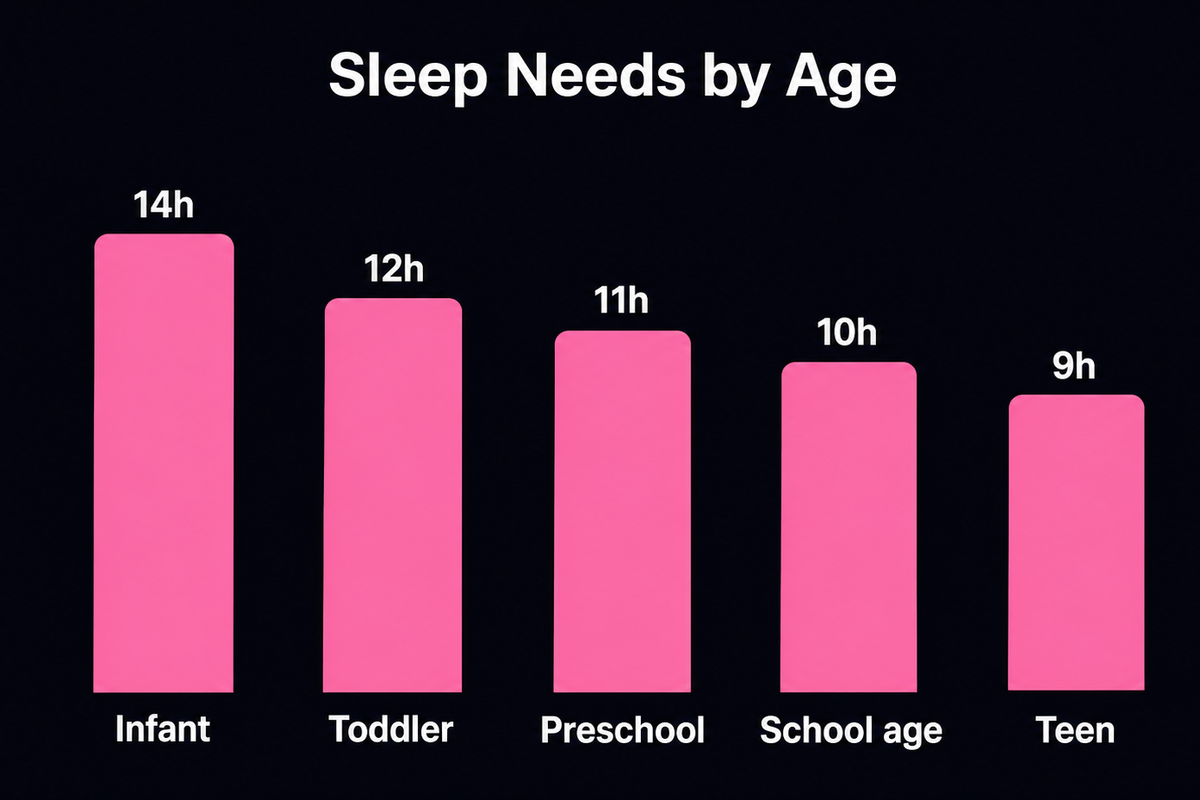
How Fast Sleep Needs Fall
Sleep need drops by a third between the first year and the teenage years, and the drop is steepest early. These are totals across 24 hours, so naps count toward them.
Recommended total sleep per 24 hours at each stage of childhood, naps included.
Midpoints of the American Academy of Sleep Medicine recommended ranges, endorsed by the American Academy of Pediatrics. Every child sits somewhere in the range rather than on the midpoint.